Listening for the Join: The Raincoat Witness by William Gomes
The Raincoat Witness begins not with a night of rain but with the account of one, written down long ago and agreed by everyone since. “The account that had drawn her here was a child’s, taken a long time ago, about a man by the water on the night another man drowned.” The woman who has come to read it is Mina Ford, and reading accounts is her trade: she is paid to examine old witness statements and say which sentences belong to the speaker and which were put there later by other hands. Her gift is described in one sentence: “Her whole trade was listening for that splice, the faint change of grain where the said stopped being the seen.” Delicate work. The rewards are not: “It made her no friends in the towns she did it in.”
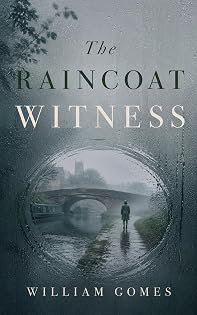
The account is this. On a night of rain, Robbie Awde drowned by the cut, the town’s still water. The witness was Etta, a child of nine, who saw a man by the water. What she said was written down, and in time it settled. The town’s noticeboard carries the official version to this day: a man making his way home along the towpath in the rain. It is calm, it is complete, and it lets the town sleep. The novel has a name for that register: “And then the water, and the drowning, set down in the settled civic voice a town finds for its worst day once the day is old enough to be heritage.” The settled sentence on the noticeboard is word for word the sentence in the child’s account. To Mina’s ear, that is the trouble.
A real grief leaves a burr somewhere in the telling. A frightened child’s account should catch, and hesitate, and leave gaps. This telling has none. Mina’s whole method fits into a single line: “A frightened child does not talk like a witness statement.” She is not looking for a liar; there may be no liar in this book at all. She is looking for the join, the exact place where a child’s sight was dressed in a sentence by the adults around her, until the sentence wore the shape of memory.
“A frightened child does not talk like a witness statement.”
The evidence is a matter of light. What can a child actually see, at night, in rain, by one lamp on a bridge? The book answers out of a driver’s knowledge of the night bus route, and of what the bridge lamp does to anything passing under it: “A coat by that water at that lamp is a shine and an arm”. A shine and an arm. Not a face. Not a name. And a coat seen by that light is the commonest thing in the world, which is precisely the danger of it: “A coat that common could be worn by anybody, which was the same as saying it could be hung on anybody, and somebody had hung it on a name.”
The town is the book’s second character, and it is arranged, kindly and completely, by Harriet Vale, who runs the lunch club, raised the water safety fund, and orders the town’s grief as she orders its seating: “Harriet chose who sat by whom and what was said over the urn and which griefs were honoured aloud and which were folded away.” Etta, the child of the account, is grown now and runs the town’s wash place; she has lived inside the settled sentence all her life. Nia, who wrote the child’s account down at the time, cleanly and well, kept something of her own back from the file: “‘I made my own copy at the time,’ Nia said, before Mina had asked anything.” And Lila North, at the charity shop, does the town’s other kind of keeping: holding grief a piece at a time, not deciding it whole.
Mina is not innocent in any of this. Years before, in another town, she said she was sure, and said it firmly, because firmness closed cases: “She had been proud of the firmness, because firmness closed cases, and an open case is a town that cannot sleep.” That is why she listens the way she does now. The book distils her lesson into one quiet sentence: “That a truth held quiet is not the same thing as a kindness.” And it leaves her, and the reader, with the question the town’s arranger puts to her: “But you might ask yourself who it’s for, the truth you’re after.” Not only what happened by the water, then, but what should happen when a truth belongs not to the person who finds it, but to the person who must live with it.
There is no detective in this book, no suspect pool, and no twist laid on for shock. Its subjects are testimony and memory, kindness used as control, and the cost of a story that lets people sleep.
Tina Copp narrates the audiobook, and hers is a reading that trusts the material: the town, its rain and its long-held sentence, all carried without hurry or strain.
The Raincoat Witness is available in paperback and on Kindle, and as an audiobook on Audible. Read more about the book at its page: https://williamnicholasgomes.com/books/the-raincoat-witness/. The Kindle edition is at https://www.amazon.co.uk/dp/B0H5PTF3NT and the paperback at https://www.amazon.co.uk/dp/B0H5QFDP1X. The audiobook, narrated by Tina Copp, is at https://www.audible.co.uk/pd/The-Raincoat-Witness-Audiobook/B0HNKV71WN. And if you would like to listen, William Gomes gives Audible promo codes for the audiobook free on request through his website, as a gift: no pressure, nothing asked in return, and no review expected. Just ask.
Watch the film: The Raincoat Witness by William Gomes

About the author
William Gomes is a novelist, poet and researcher. He writes about what the record leaves out: the people behind a verdict, a file, a form or a border. Read more about William Gomes.
Keep reading
The Names Left Behind: The Last Guest List by William Gomes — Keep reading →
The Woman in Room Nine: THE NINTH ROOM by William Gomes — Keep reading →